Our Spring 2026 meeting will be held April 11, 2026 at Shippensburg University.
Registration
Register for the meeting
Directions and Parking
Attendees should park in lot FS-3.
GPS Directions to Parking Campus MapSchedule
Most events take place in Dauphin Humanities Center (DHC)
| 9:00 - 11:00 | Registration
DHC Lobby |
| 9:00 - 9:30 | Light Breakfast Reception (coffee, tea, pastries)
DHC Lobby |
| 9:30 - 9:40 | Welcoming Remarks
DHC 051 |
| 9:40 - 10:30 | Invited speaker: Paul Pasles
Benjamin Franklin’s Mathematics
DHC 051 |
| 10:30 - 11:00 | Coffee Break & Silent Auction
DHC Lobby |
| 11:00 - 11:50 | Invited speaker: Ingrid Daubechies
Mathemalchemy: A Mathematical and Artistic Adventure
DHC 051 |
| 11:50 - 12:10 | Business Meeting, Section Awards, Group Photo
DHC 051 |
| 12:10 - 1:30 | Lunch
Reisner Dining Hall |
| 1:40 - 2:55 | Student Speaker Sessions
Various DHC Rooms |
| 3:00 - 4:00 | Faculty/Graduate Speaker Sessions
Various DHC Rooms
Student Activity
DHC 151 |
| 4:10 - 5:00 | Invited speaker: Paul Blanchard
Newton's Method: Complex Numerics and Complex Dynamics
DHC 051 |
| 5:00 - 5:30 | Reception & Silent Auction Winners
DHC Lobby |
Invited Speakers
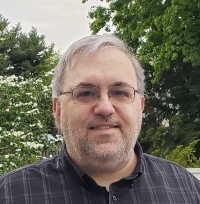 Paul Pasles
Villanova University
Benjamin Franklin’s Mathematics
Centuries after the death of Benjamin Franklin, his mathematical discoveries continue to be cited in academic journals and books. Franklin was willing to apply basic mathematics to situations where only qualitative arguments had been admitted previously. How did a self-educated amateur scientist conceive of original concepts in such wide-ranging areas as demography, decision-making, and most famously, the art of magic squares? This talk will examine Franklin’s self-education and early influences, his contributions to quantitative thinking, and his influence on others.
Paul C. Pasles traveled to all 50 states in the U.S. before his 16th birthday, but he remains a lifelong resident of the Philadelphia area. He studied undergraduate mathematics at the University of Pennsylvania and graduate mathematics at Temple University, held a visiting position at Saint Joseph’s University, and has taught at Villanova University since 1999. The author of Benjamin Franklin’s Numbers: An Unsung Mathematical Odyssey (Princeton University Press, 2008), he received the James P. Crawford Award for Distinguished College or University Teaching from the EPaDel Section of the MAA in 2022.
View bio
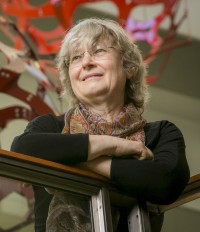 Ingrid Daubechies
Duke University
Mathemalchemy: A Mathematical and Artistic Adventure
Mathemalchemy is a collaborative art installation conceived as the brainchild of mathematician and physicist Ingrid Daubechies and fiber artist Dominique Ehrmann, and driven by the energy and enthusiasm of 24 mathematical artists and artistic mathematicians. The installation celebrates the creativity and beauty of mathematics. Playful constructs include a flurry of Koch snowflakes, Riemann basalt cliffs, and Lebesgue terraces. It was designed and constructed during the pandemic, and has been touring North America since January 2022; it will soon move to its 5th exhibition venue. The talk will review the genesis and creation of the installation, and highlight some of its mathematical features.
Ingrid Daubechies earned her doctorate in theoretical physics at the Free University of Brussels before joining AT&T Bell Laboratories in 1987, where her foundational work on wavelets established her international reputation. Her wavelets preserved deep mathematical structure while enabling major advances in signal and image processing, including JPEG2000 compression, with applications ranging from brain imaging to art restoration. Daubechies has held faculty positions at Rutgers, Princeton, and Duke University, where she is James B. Duke Distinguished Professor Emerita. Her honors include a MacArthur Fellowship, the Wolf Prize, and the National Medal of Science. She has also been a leading advocate for equity in mathematics and for connections between mathematics and art.
View bio
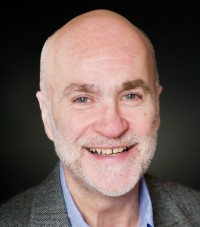 Paul Blanchard
Boston University / MAA
Newton's Method: Complex Numerics and Complex Dynamics
Newton's method is an iterative root-finding algorithm that is both simple and surprisingly efficient. We start with an initial guess for the root and apply the algorithm repeatedly until we obtain the desired approximation. Unfortunately, a random guess does not always lead to a root. In this talk, we use the theory of complex dynamics along with some computer graphics to explain the difficulties that might arise, and we suggest ways to avoid these pitfalls. As the story unfolds, we encounter both chaos and fractals.
Paul Blanchard taught collegiate mathematics for 46 years, mostly at Boston University where he is currently Professor Emeritus of Mathematics. In 2001, he won the Northeast Section of the MAA’s Award for Distinguished Teaching of Mathematics. His main area of mathematical research is complex analytic dynamical systems and their related point sets, e.g. Julia sets and the Mandelbrot set. He is known for the textbook that he wrote with Robert L Devaney and Glen R Hall which discusses studying solutions to ordinary differential equations using qualitative, numeric, and analytic approaches. He is an inaugural fellow of the AMS, and recently began serving as the Treasurer of the MAA.
View bio
Local Organizers
The local organizer for this meeting is
Grant Innerst
of Shippensburg University. Please contact a local organizer with site-specific questions, or contact an Executive Committee member with more general questions.